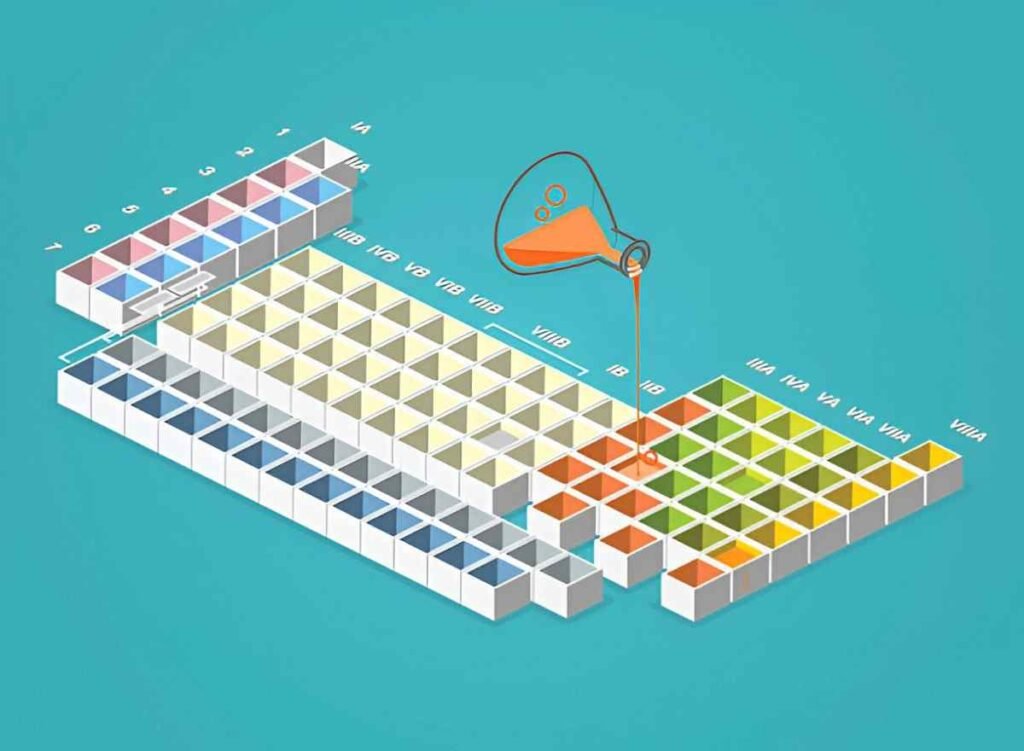
This Periodic Table Template (Excel Format) is a comprehensive and user-friendly tool designed to help educators, students, chemists, and science enthusiasts explore and utilize the periodic table effectively. Whether you’re teaching chemistry, conducting research, or simply learning about elements, this template provides a structured framework for organizing and analyzing information about the elements.
Key Features:
- Element Information : Includes predefined fields for atomic number, symbol, element name, atomic weight, and more.
- Categories and Groups : Predefined sections for metals, non-metals, noble gases, halogens, and other categories.
- Customizable Fields : Modify categories and inputs to match your specific educational or research needs.
- Professional Design : Clean layout ensures ease of use and professional presentation, suitable for classroom use or scientific presentations.
- Searchable Data : Easily locate elements by name, symbol, or atomic number.
Use Cases:
- Educators : Use the periodic table to teach chemistry concepts in classrooms or online courses.
- Students : Simplify the process of studying elements without investing in complex software tools.
- Chemists : Organize and analyze data related to chemical elements for research purposes.
- Science Enthusiasts : Explore the properties and characteristics of elements for personal interest.
How It Works:
This Periodic Table Template is designed to be intuitive and user-friendly. Here’s how it works:
- Input Element Details : Enter details such as atomic number, symbol, element name, and atomic weight in the designated fields.
- Record Categories : Assign each element to its respective category (e.g., metal, non-metal, noble gas).
- Track Properties : Use the predefined categories to track additional properties such as electron configuration, density, melting point, and boiling point.
- Visualize Relationships : Use the organized layout to visualize relationships between elements based on their groups and periods.
- Adjust Plans : Modify the periodic table based on new discoveries or insights gained from ongoing research.