Opulent Victorian Grandeur in Geometric Form
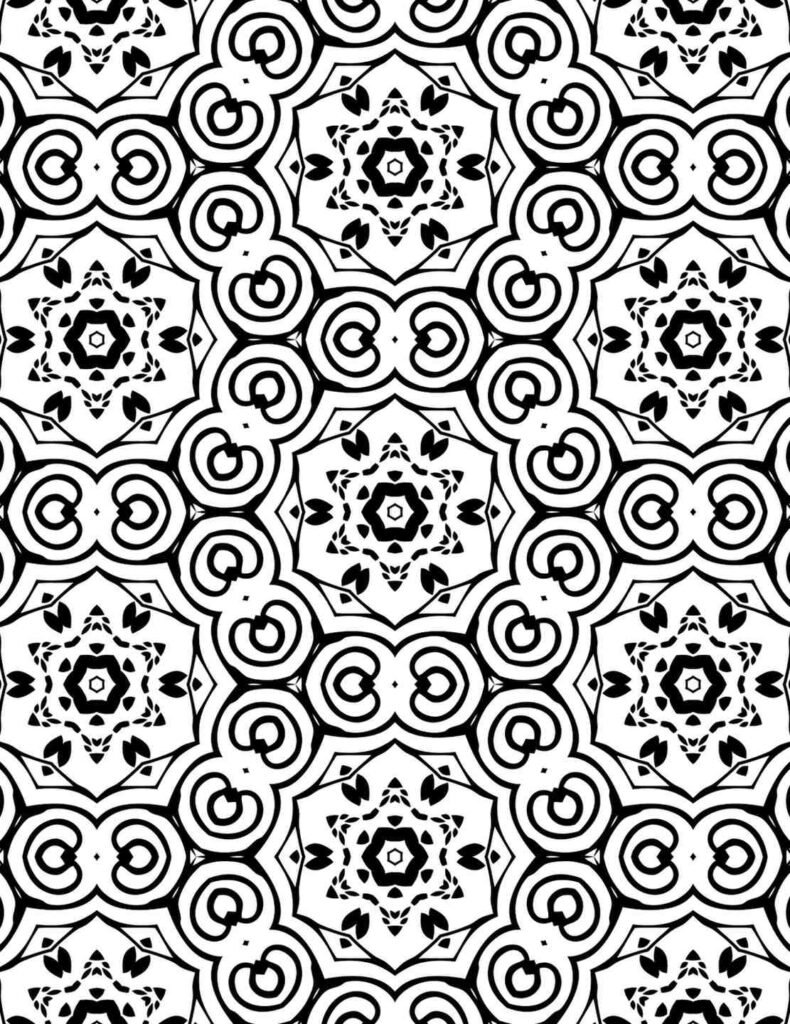
This magnificent baroque spiral mandala embodies the lavish decorative spirit of Victorian-era design, where ornamental excess was celebrated as artistic virtue. The pattern weaves together elaborate scrollwork with structured geometric foundations, creating a visual feast that would feel at home adorning the walls of a grand European palace. Each hexagonal medallion contains its own miniature world of intricate details, while sweeping spiral chains connect these ornate islands in an endless dance of decorative luxury.
The design philosophy here embraces maximalism over minimalism, where every available space receives careful ornamentation. This approach reflects historical periods when craftsmanship was measured by complexity and artistic worth determined by the density of decorative elements. Modern colorists can appreciate this aesthetic philosophy while adapting it to contemporary sensibilities through thoughtful color choices.
Hierarchical Pattern Organization
Unlike simpler mandala designs that rely on single-layer construction, this baroque creation operates through multiple organizational systems working simultaneously. The primary hexagonal framework creates stable anchor points, while the spiral connectors form secondary pathways that lead the eye on elaborate journeys across the surface. Within each hexagon, tertiary patterns emerge through careful arrangement of small-scale elements that reward close examination.
This hierarchical approach allows colorists to work at different scales depending on their mood and available time. Broad color washes can emphasize the overall geometric structure, while detailed work on individual elements creates intimate moments of focus within the larger composition. The spiral connectors offer opportunities for gradient work that can unify separate sections or create dramatic contrasts that emphasize the pattern’s complexity.
Therapeutic Complexity for Advanced Practitioners
Working with baroque-style patterns provides unique therapeutic benefits for colorists ready to embrace challenging projects. The demanding detail work naturally extends coloring sessions into longer, more immersive experiences that promote sustained concentration states. Unlike simple patterns that can be completed quickly, this design requires patience and planning that mirrors the meditative qualities of traditional crafts like embroidery or wood carving.
The repetitive spiral elements create rhythmic coloring experiences that can induce trance-like states of focused awareness. Many advanced colorists report that such complex patterns help them disconnect from digital distractions and reconnect with slower, more intentional creative processes. The demanding precision required for small details naturally quiets mental chatter and promotes present-moment awareness.
Historical Design Context and Modern Applications
This pattern draws inspiration from the decorative arts traditions that flourished during the 18th and 19th centuries, when skilled craftsmen created elaborate wallpapers, textiles, and architectural ornaments for wealthy patrons. The spiral motifs echo ironwork patterns found in grand staircases and garden gates, while the geometric framework reflects the mathematical precision that underlies seemingly organic decorative schemes.
Contemporary designers can use this mandala as a reference for creating sophisticated repeat patterns that blend historical elegance with modern functionality. The design scales beautifully for large-format applications like wall murals or fabric printing, where the ornate details can be appreciated at architectural scale.
Color Strategy for Maximum Impact
The baroque aesthetic traditionally employed rich, saturated colors that emphasized luxury and sophistication. Deep jewel tones like emerald, sapphire, and ruby work beautifully with gold accents that highlight the spiral elements. Alternatively, monochromatic approaches using varying shades of single colors can emphasize the pattern’s structural sophistication over its decorative complexity.
For those seeking contemporary interpretations, unexpected color combinations can transform the historical feel into something fresh and modern while maintaining the essential character of ornate elegance.