Timeless Elegance of Islamic Architectural Art
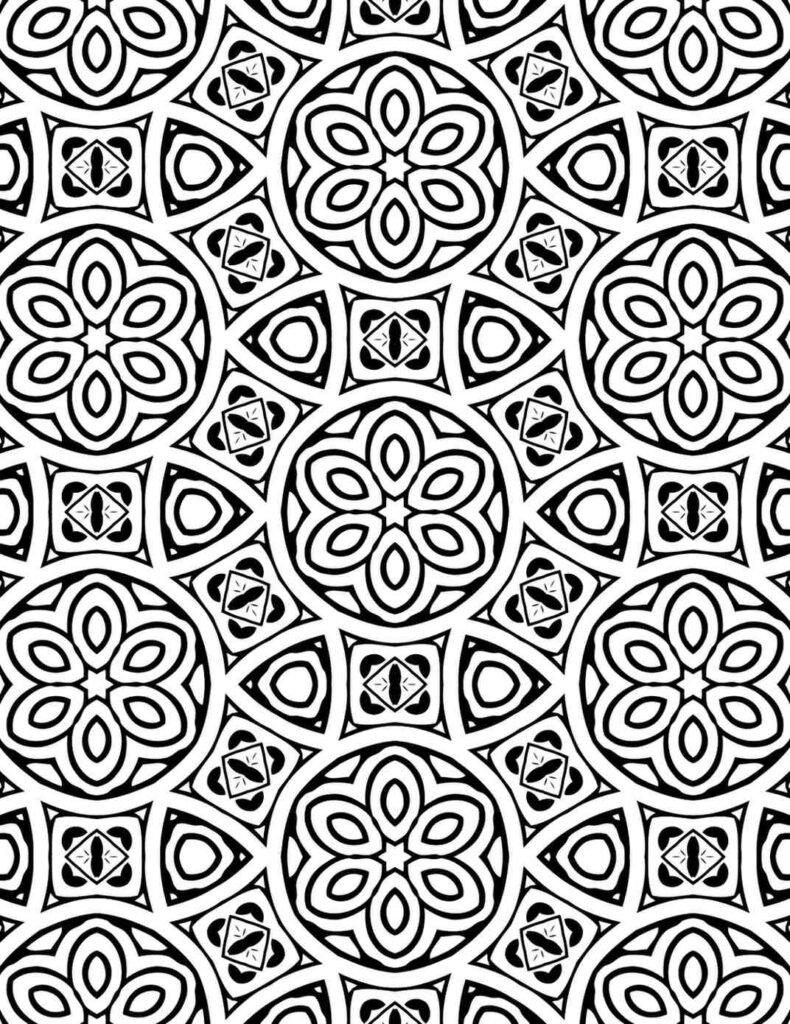
Journey through the corridors of ancient palaces with this exquisite Moroccan tile mandala that captures centuries of Islamic geometric mastery. The design recreates the sophisticated tilework found in historic mosques and royal residences, where mathematical precision meets divine inspiration. Each circular medallion blooms like a stylized flower within its own geometric garden, connected by an intricate network of angular pathways that create mesmerizing visual corridors.
The pattern demonstrates the Islamic artistic principle of infinite continuation, where borders become beginnings and endings dissolve into eternal flow. This philosophical approach to design transforms simple geometric shapes into profound spiritual metaphors, making each coloring session a meditation on perfection and divine order.
Complex Symmetry Systems at Work
What distinguishes this mandala from typical radial designs is its sophisticated tessellation structure. Instead of radiating from a single center, the pattern operates through multiple focal points that create interlocking relationships across the entire surface. The circular floral medallions serve as primary anchors, while diamond-shaped connector elements form secondary patterns that emerge only through careful observation.
The genius lies in how each element serves dual purposes – the curved petals within circles provide organic softness, while the rigid geometric frames maintain structural integrity. Small triangular spaces create breathing room that prevents visual overwhelm, demonstrating the Islamic understanding of proportion and balance. This complexity rewards patient exploration, revealing new relationships with each viewing.
Architectural Inspiration for Modern Spaces
Beyond its meditative qualities, this Moroccan tile pattern offers practical inspiration for contemporary design projects. Color it in traditional blue and white combinations reminiscent of Fez ceramics, or explore modern palettes that translate ancient wisdom into current aesthetics. The seamless repeat structure makes it perfect for creating custom wallpaper designs or textile patterns that bring sophisticated elegance to any room.
Interior designers often reference such geometric patterns when seeking alternatives to floral or organic motifs. The mathematical precision appeals to minimalist sensibilities while the cultural richness satisfies desires for meaningful decoration. Print multiple copies and experiment with different color combinations to create a series of coordinated art pieces.
Focused Concentration Through Repetitive Detail
The demanding precision of Islamic geometric patterns naturally cultivates intense focus states that modern life rarely provides. Each petal requires careful attention to maintain the overall harmony, while the connecting elements demand strategic planning to avoid color conflicts at intersection points. This level of engagement effectively quiets mental chatter and promotes the deep concentration valued in contemplative practices.
Many colorists report losing track of time while working with such patterns, entering flow states where the boundary between artist and artwork dissolves. The repetitive nature creates a rhythm similar to prayer beads or walking meditation, where the physical action supports spiritual centering.
Cultural Appreciation Through Artistic Engagement
Working with Islamic geometric patterns offers respectful engagement with a rich cultural tradition that spans continents and centuries. The mathematical principles underlying these designs influenced European art during the medieval period and continue inspiring contemporary artists and architects worldwide. Through careful coloring, practitioners develop appreciation for the sophisticated thinking that created these timeless patterns.
Use this mandala as an entry point for exploring Islamic art history, or incorporate it into educational settings where geometric principles meet cultural studies.